










Wood vs Laminate Worktops: Which Kitchen Worktop Is Best for Your Lifestyle?

Choosing between wooden and laminate kitchen worktops can be a difficult choice. Both materials offer distinct advantages, and the right option will depend on your lifestyle, budget and how you use your kitchen day to day.
If you’re looking for natural warmth, long-term durability and a surface that develops character over time, wooden worktops could be the better fit, especially if you don’t mind a little ongoing maintenance. On the other hand, laminate worktops are ideal if affordability, easy installation and lower upfront costs are your priorities.
So, which one is right for you? Let’s break it down.
Wood vs Laminate Worktops: Key Differences
When comparing wood and laminate worktops, the best choice depends on what matters most to you. Wood worktops offer natural beauty, long-term durability and the ability to repair minor damage over time. However, they require regular maintenance and typically come with higher upfront costs.
Laminate worktops are more affordable, easier to install and available in a wider range of finishes. While they require less maintenance, they generally have a shorter lifespan and are more difficult to repair if damaged. The table below highlights the key differences at a glance.
|
Feature |
Wood Worktops |
Laminate Worktops |
| Cost | Mid-range investment | Budget-friendly option |
| Appearance | Natural grain and unique character | Can mimic wood, stone, marble and quartz finishes |
| Durability | Highly durable with proper maintenance | Less durable and more prone to chips and scratches |
| Lifespan | Can last for decades | Typically, 10–12 years |
| Maintenance | Requires regular oiling and retreatment | Low maintenance |
| Repairability | Scratches and dents can often be sanded out and repaired | Difficult to repair once damaged |
| Heat Resistance | Moderate; can be marked by hot pans | Can scorch or blister if exposed to excessive heat |
| Water Resistance | Good when properly maintained | Good unless moisture penetrates damaged areas |
| Installation | Heavier and more complex to fit | Lightweight and easier to install |
| Design Options | Limited to natural wood species and finishes | Wide variety of colours, patterns and effects |
| Sustainability | Renewable natural material when responsibly sourced | Depends on manufacturing materials and lifespan |
| Best for | Homeowners seeking longevity, character and natural beauty | Budget-conscious households looking for low maintenance, affordability and design flexibility |
Solid Wooden Worktops: Pros, Cons and Best Uses
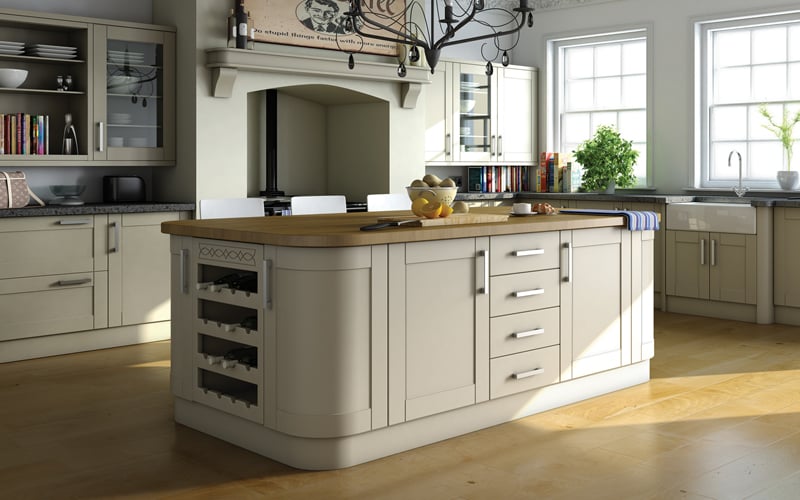
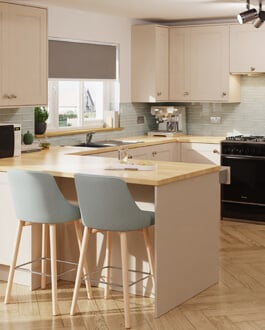
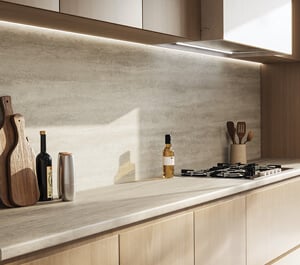
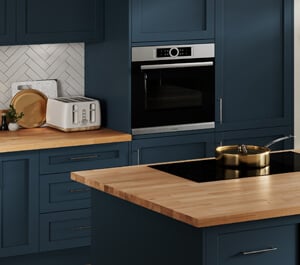
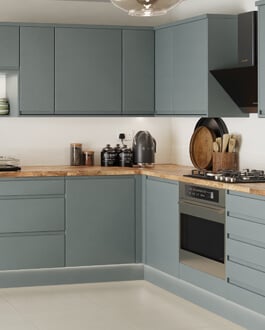
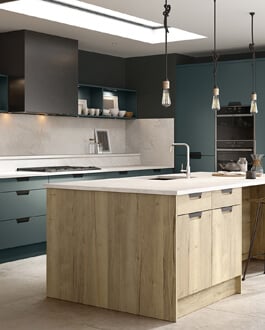
Wooden worktops bring natural warmth, texture and character to a kitchen. Available in a variety of species, from lighter woods such as oak to darker options like walnut, they can complement everything from traditional farmhouse kitchens to sleek contemporary designs.
Solid wood worktops can be manufactured from a single piece of timber or from joined strips known as butcher block worktops. Both offer a timeless appearance that can improve with age when properly maintained.
Benefits of Wooden Worktops
One of the standout features of wooden worktops is how they age. Over time, the colour of the timber deepens and develops a natural patina, giving the surface more character and individuality.
Wood is also known for its longevity. With proper care, a wooden worktop can last for decades, making it a popular choice in both domestic and commercial kitchens.
Unlike many alternative materials, minor dents, scratches and signs of wear can often be sanded out and refinished. This ability to restore the surface helps extend the lifespan of the worktop and keep it looking its best for years to come.
Drawbacks of Wooden Worktops
While wooden worktops offer excellent durability, they do require regular maintenance. To preserve their appearance and resistance to moisture, most wood worktops should be oiled every six to eight weeks and fully retreated periodically.
Wood can also be susceptible to scorch marks, staining and water damage if left untreated. Although many imperfections can be repaired, preventative care is important.
Cost is another consideration. Wood worktops typically sit in the mid-range price bracket, costing more than laminate but often less than premium stone surfaces such as granite or marble.
Installation can also be more complex due to the weight of the material and its natural tendency to expand and contract in response to changes in temperature and humidity.
Are Wooden Worktops Right for Your Kitchen?
If you're considering a wooden worktop, here's a quick summary of the main advantages and drawbacks to keep in mind before making your decision.
|
Advantages |
Considerations |
| Natural warmth and character | Requires regular oiling and maintenance |
| Can last decades with proper care | Higher upfront cost than laminate |
| Minor scratches and dents can be repaired | Can be vulnerable to staining and scorch marks |
| Develops a unique patina over time | Installation can be more complex due to weight and movement |
| Available in a range of wood species and finishes |
Laminate Worktops: Pros, Cons and Best Uses
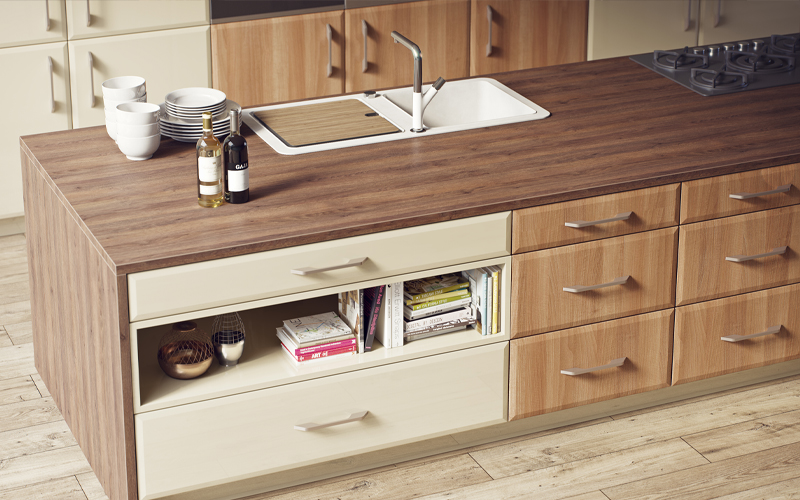
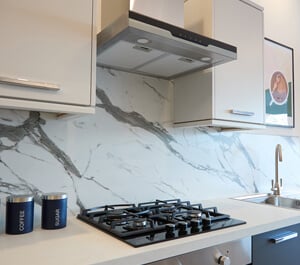
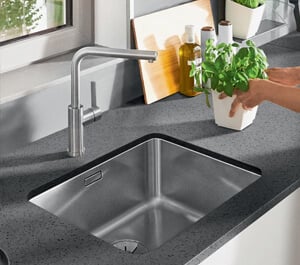
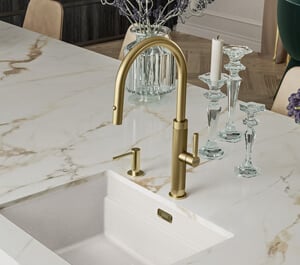
Laminate worktops are one of the most versatile and cost-effective options available for modern kitchens. Advances in manufacturing allow them to replicate the appearance of wood, marble, quartz and stone while remaining significantly more affordable.
Available in a wide range of colours, patterns and finishes, laminate worktops offer homeowners the flexibility to achieve almost any design style without the premium price tag associated with natural materials.
Benefits of Laminate Worktops
Laminate Worktops are created by forming a thin layer of ‘dressing wood’ over a pressboard, or a medium to high-density fibreboard (MDF) underwood. This material can be heavily stained, varnished or come with scratch-resistant polymer coating.
One of the biggest advantages of laminate worktops is affordability. They provide the look of premium materials at a fraction of the cost, making them a popular choice for budget-conscious kitchen renovations.
Laminate worktops are also lightweight and relatively straightforward to install. Their flexibility can make them easier to fit in kitchens with awkward layouts, corners or unusual dimensions.
Modern laminate designs have improved significantly in recent years, with high-definition printing and realistic textures helping create convincing wood and stone-effect finishes.
Laminate worktop Drawbacks
Despite their affordability and versatility, laminate worktops are generally less durable than solid wood alternatives. Laminate comes with a strong polymer coating which offers extra protection – but this is a necessary mitigation against damage.
The protective surface layer can become chipped, scratched or damaged by excessive heat. Unlike wood, laminate cannot usually be sanded back and refinished once the decorative layer has been compromised.
As a result, laminate worktops often have a shorter lifespan and may need replacing after 10 to 12 years, depending on usage and maintenance.
Are Laminate Worktops Right for Your Kitchen
Laminate worktops offer excellent value and versatility, but they may not be the right choice for every household. Here's a quick overview of their strengths and limitations.
|
Advantages |
Considerations |
| Affordable and budget friendly | Generally less durable than solid wood |
| Available in a huge range of colours and finishes | Damage can be difficult to repair |
| Low maintenance and easy to clean | Shorter lifespan than many natural materials |
| Lightweight and easier to install | Can be affected be excessive heat |
| Can replicate the look of premium materials |
Which Kitchen Worktop Should You Choose?
There is no single best kitchen worktop, only the option that best suits your lifestyle, budget and priorities.
Choose wood worktops if you value natural character, long-term durability and a surface that develops personality over time. While they require regular maintenance, many homeowners feel the warmth and authenticity of real wood is worth the extra care.
Choose laminate worktops if affordability, low maintenance and design flexibility are your main priorities. Modern laminate surfaces can convincingly replicate premium materials while keeping costs under control.
In general, wood worktops are best suited to homeowners prioritising longevity and natural character, while laminate worktops are ideal for those seeking a practical, cost-effective and low-maintenance solution.
Whichever option you choose, considering how you use your kitchen day to day will help you find a worktop that looks great and performs well for years to come.
If you’re on the fence, then the best option is to head down to one of our showrooms and speak with our design experts who can help you make a great choice.

Fall back in love with your kitchen
With over 90 showrooms nationwide, Dream Doors’ expert designers are ready to help you create your dream kitchen.
Book an appointment with your local showroom or click below to find the one nearest to you and start your transformation today.